Self-Employed Expenses: What Can You Claim?
Written and reviewed by Zoe, Managing Director at Kernow Accountancy : our family-run Helston practice has been advising Cornish sole traders, landlords and small businesses since 2011.
A practical UK sole trader expenses checklist, with home working examples, the trading allowance and the costs HMRC will not allow. Plain-English help for small businesses in Cornwall.
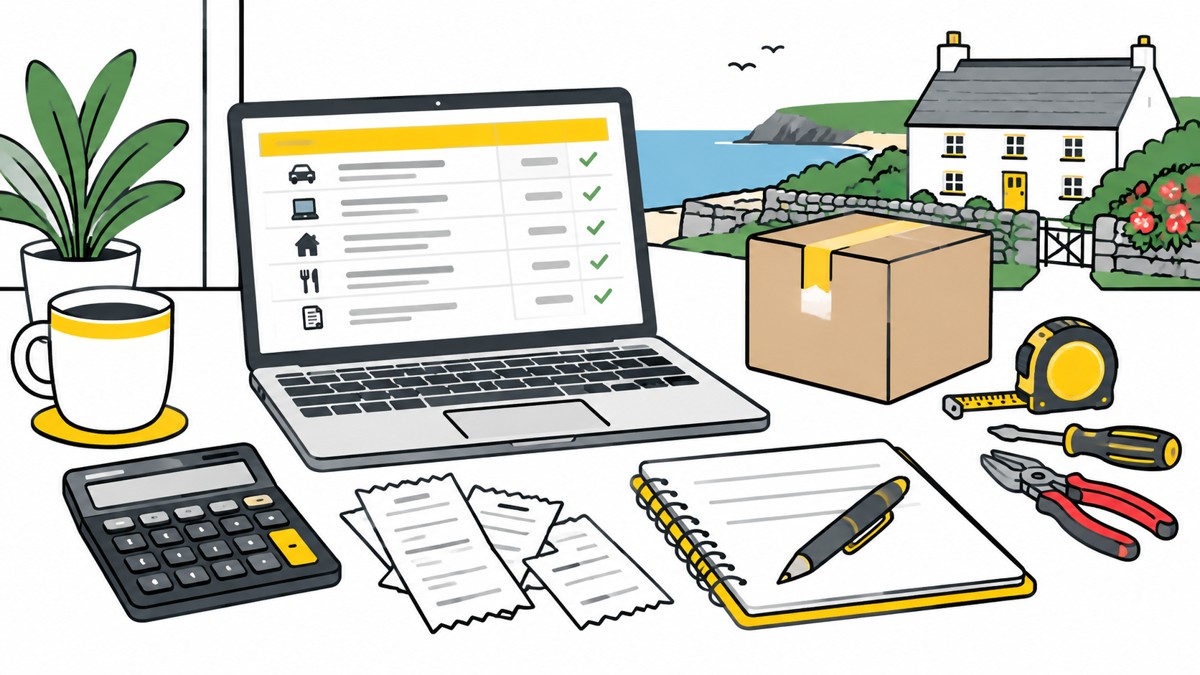
In short: if you are self-employed, you can deduct allowable business expenses from your income before working out your taxable profit. Claim the business part, keep evidence and do not claim the same cost twice.
Whether you are an electrician in Helston, a freelance designer in Falmouth or an online seller elsewhere in Cornwall, it is easy to miss small costs that add up. This guide turns HMRC's rules into a practical checklist for sole traders. Limited companies follow a different set of rules; see our limited company accounting page.
What are self-employed business expenses?
They are costs of running your trade that HMRC allows you to deduct when calculating profit. The starting point is the wholly and exclusively for business test. If a cost has a clearly identifiable business and personal split, claim only the business part.
For example, if 40% of your phone use is genuinely for business, you would claim 40% of the relevant bill, not the whole amount. Keep a reasonable explanation of how you calculated it.
An expense is not a pound-for-pound tax refund. Spending £100 does not mean HMRC gives you £100 back. It reduces taxable profit by £100, with the tax saving depending on your circumstances. Buying things you do not need just to get a deduction still leaves you worse off.
Sole trader allowable expenses list: what can you claim?
Use this checklist to review your records. The examples are not automatic approvals: the business purpose, evidence and accounting method still matter.
| Expense category | Typical allowable costs | What to check |
|---|---|---|
| Stock and materials | Goods for resale, ingredients, packaging and trade supplies | Exclude items taken for personal use |
| Office and software | Stationery, bookkeeping subscriptions, business phone and internet | Claim only the business share |
| Tools and equipment | Computers, printers, tools and machinery | Cash basis and capital allowance rules differ |
| Travel | Qualifying business journeys, parking, train fares and overnight accommodation | Exclude private travel and normal commuting |
| Premises and home working | Business rent, utilities, insurance and eligible home costs | Use a reasonable split or eligible simplified expenses |
| Professional services | Business accountancy, legal advice and business insurance | Personal tax return work and capital costs need separate treatment |
| Staff and subcontractors | Wages, employer National Insurance, pensions and agency fees | Your own drawings are not staff wages |
| Marketing | Advertising, business website costs and promotional materials | Client entertaining is not deductible |
| Training and subscriptions | Relevant courses, trade journals and professional memberships | Training must support the current business |
Trading allowance or actual expenses: which should you use?
For 2026/27, eligible individuals can use the £1,000 trading allowance instead of deducting actual expenses from the same income. You cannot use both, and you cannot claim capital allowances against that income if you use the trading allowance.
The government has announced an increase to £3,000 from 6 April 2027, subject to legislation. Do not apply that future figure to a 2026/27 return.
Here is an illustrative comparison for an eligible sole trader in 2026/27:
| Income and costs | Actual expenses method | Trading allowance method |
|---|---|---|
| £8,000 income and £600 allowable costs | £7,400 taxable trading profit | £7,000 taxable trading profit |
| £8,000 income and £2,500 allowable costs | £5,500 taxable trading profit | £7,000 taxable trading profit |
These are profit figures before personal allowances, other reliefs and tax calculations. In the first example the allowance gives a larger deduction; in the second, actual costs do. Eligibility restrictions apply, including to certain income from connected businesses. If you have a loss or more than one trade, ask for advice before choosing.
Can you claim working from home expenses?
Yes, where the cost relates to your business. There are two main approaches.
Option 1: simplified home working expenses
If you work from home for at least 25 hours a month, HMRC allows these monthly flat rates:
| Hours of business use at home per month | Monthly deduction |
|---|---|
| 25 to 50 hours | £10 |
| 51 to 100 hours | £18 |
| 101 hours or more | £26 |
At 101 hours or more every month, that is £312 a year. Keep a record of your hours. The flat rate does not include telephone or internet costs; calculate the business share of those separately.
Option 2: calculate actual home costs
You can instead calculate a reasonable business proportion of eligible heating, electricity, council tax, mortgage interest or rent. Mortgage capital repayments are not a running expense. Consider both the space used and the time it is used for business.
Illustrative electricity example: an annual bill of £750, split equally across six rooms, gives £125 per room. If one room is used for business four days out of seven, the business share would be £125 × 4 ÷ 7 = £71.43. This assumes equal electricity use across rooms and that the stated days reflect actual use. It is not a fixed HMRC formula for every home.
Do not claim the flat rate and actual household running costs for the same period. Ask for advice before using a room exclusively for business, as that can have other tax consequences.
Business travel, mileage and vehicle costs
Qualifying business journeys can include visits to customers, suppliers or temporary work locations. Normal commuting to a regular workplace and private journeys are not allowable. Whether a journey from home qualifies depends on the facts, not just whether you do some admin at home.
You can usually choose an eligible mileage method or the business share of actual vehicle running costs. Do not claim mileage and fuel, servicing or other costs already covered by the mileage rate for the same vehicle. Keep a log of dates, destinations, business purpose and miles.
Cars have separate purchase rules. Under cash basis, a car purchase may qualify for capital allowances rather than a normal expense, while other business equipment, including vans, is generally treated differently. Check the method before claiming a vehicle purchase.
Hotel bills and reasonable meals during qualifying overnight business travel can be allowable. Everyday lunches do not become business expenses simply because you eat them while working.
Can you claim laptops, equipment and tools?
Under cash basis accounting, equipment bought and kept for business use, such as computers, printers and tools, is usually claimed as an allowable expense when paid for. Restrict the claim for any private use. Cars are an important exception.
Under traditional accounting, equipment kept for use in the business is generally claimed through capital allowances instead. The correct treatment is not decided just by the price or whether the item lasts more than two years.
Software subscriptions, stationery and other everyday running costs are normally allowable where they relate to your business. For more on keeping records yourself, see our DIY bookkeeping guide.
Professional fees, finance and staff costs
Business accountancy work, business legal advice, public liability insurance and professional indemnity cover can qualify. HMRC excludes the cost of preparing and submitting your personal Self Assessment tax return, so distinguish that from the business accounts work.
Business bank charges and loan interest may qualify. Loan capital repayments do not. Legal costs connected with buying property or machinery can require capital treatment rather than an ordinary deduction.
If you employ staff, genuine business wages, employer National Insurance, pension contributions and staff training can be allowable. Your own drawings are not a deductible wage when you are a sole trader. Our payroll team can help with the employer side.
Training, advertising and professional subscriptions
Relevant training can include improving skills you already use, keeping up with industry technology, developing skills related to changes in your industry and learning administration skills such as bookkeeping. Training to start a new business or move into an unrelated business area is not normally deductible.
Business advertising, website running costs, trade journals and relevant professional memberships can also qualify. Client entertaining does not become deductible because you hope it will lead to work.
Allowable vs disallowable expenses: common mistakes
Leave these out of your business expense claim:
- private spending and personal drawings
- ordinary commuting and private travel
- fines and penalties
- client, customer or supplier entertaining
- everyday clothes, even if you wear them only for work
- ordinary personal meals
- loan capital repayments
- the personal Self Assessment return preparation cost
Uniforms and protective clothing can qualify. If a purchase has an inseparable personal purpose, do not assume you can simply assign a percentage to it. Ask before claiming doubtful items.
How to keep track of self-employed expenses
- Save evidence when you spend. Keep receipts, invoices and supporting bank records, with a note of the business purpose where it is not obvious.
- Separate personal and business spending. A dedicated account can make the review easier, even where it is not compulsory.
- Categorise costs regularly. A monthly check is easier than sorting a year's receipts in January.
- Record mixed use and mileage. Keep the calculation, not just the final number.
- Reconcile your records. Check your software against the bank and remove duplicate entries.
Software such as Xero, QuickBooks or FreeAgent can help organise costs and store supporting documents. Choose the product and plan that suits your business rather than assuming every subscription does the same job. If Making Tax Digital applies to you, use compatible software and keep the required digital records.
Keep business records for at least five years after the 31 January submission deadline. For 2026/27, a return due on 31 January 2028 means keeping records until at least 31 January 2033. Late returns and HMRC checks can mean keeping them longer.
Short version to share
Self-employed? Claim legitimate business costs, not personal spending. Keep receipts, record business mileage and check your home working costs. Compare actual expenses with the trading allowance, but never claim both against the same income. A tax deduction reduces profit; it is not free money.
Help with sole trader expenses in Cornwall
If you are unsure what to claim, or your receipts have become a January headache, Kernow Accountancy in Helston can help you review your records and understand the rules. Bring your income figures, expense records and details of any mixed business and personal costs.
Read our payments on account guide to plan for the next tax bill, or book your free chat to discuss support for your business.
Sources and further reading
- HMRC: expenses if you are self-employed
- HMRC: simplified working from home expenses
- HMRC: cash basis income and expenses
- HMRC: legal and financial costs
- HMRC: business training courses
- HMRC: how long to keep business records
- HMRC: announced trading allowance increase
General guidance checked on 19 November 2026, not a substitute for advice on your circumstances. Tax treatment depends on the facts and accounting method. Announced future changes remain subject to legislation.
Frequently asked questions
- What expenses can I claim as self-employed?
- You can claim allowable business costs such as stock, tools, software, business travel, insurance, advertising and relevant training. For costs with both business and private use, claim only the identifiable business share. You cannot claim actual expenses as well as the trading allowance against the same income.
- Can I claim working from home expenses as a sole trader?
- Yes. You can calculate a reasonable business share of eligible household costs or use simplified expenses if you work from home for at least 25 hours a month. The monthly flat rates are £10 for 25 to 50 hours, £18 for 51 to 100 hours and £26 for 101 hours or more. Business telephone and internet costs are calculated separately.
- Can I use the trading allowance and claim expenses?
- No. Compare the trading allowance with your allowable actual expenses and choose the appropriate method for the same income. The allowance is £1,000 for 2026/27. The government has announced an increase to £3,000 from 6 April 2027, subject to legislation. Eligibility restrictions apply.
- Can I claim a laptop or tools as a business expense?
- Under cash basis accounting, equipment such as computers and tools is usually claimed as an allowable expense when paid for, limited to business use. Under traditional accounting, equipment kept for business use is generally claimed through capital allowances. Cars have separate rules.
- Can I claim clothing, lunches or client entertaining?
- Everyday clothing and ordinary personal lunches are not normally allowable. Uniforms and protective clothing may qualify. Meals during qualifying overnight business travel may be allowable, but client entertaining is not deductible just because it relates to work.
- How long should I keep self-employed expense records?
- Keep your business records for at least five years after the 31 January submission deadline for the relevant tax year. For a 2026/27 return due on 31 January 2028, that means keeping them until at least 31 January 2033. Longer periods can apply if you file late or HMRC opens a check.
- Can I claim business training courses?
- Training can qualify if it improves existing business skills, keeps you up to date with your industry or develops skills that support your current business, such as bookkeeping. Training to start a new business or enter an unrelated business area is not normally deductible.