Rent a Room Relief Pitfalls: Annexes, Converted Barns and Separate Buildings
Written and reviewed by Zoe, Managing Director at Kernow Accountancy : our family-run Helston practice has been advising Cornish sole traders, landlords and small businesses since 2011.
Can you claim Rent a Room relief on a granny annexe, converted barn or garden studio? HMRC's separate residence test, the eight factors it uses and twelve common traps, explained for Cornish homeowners and Airbnb hosts.
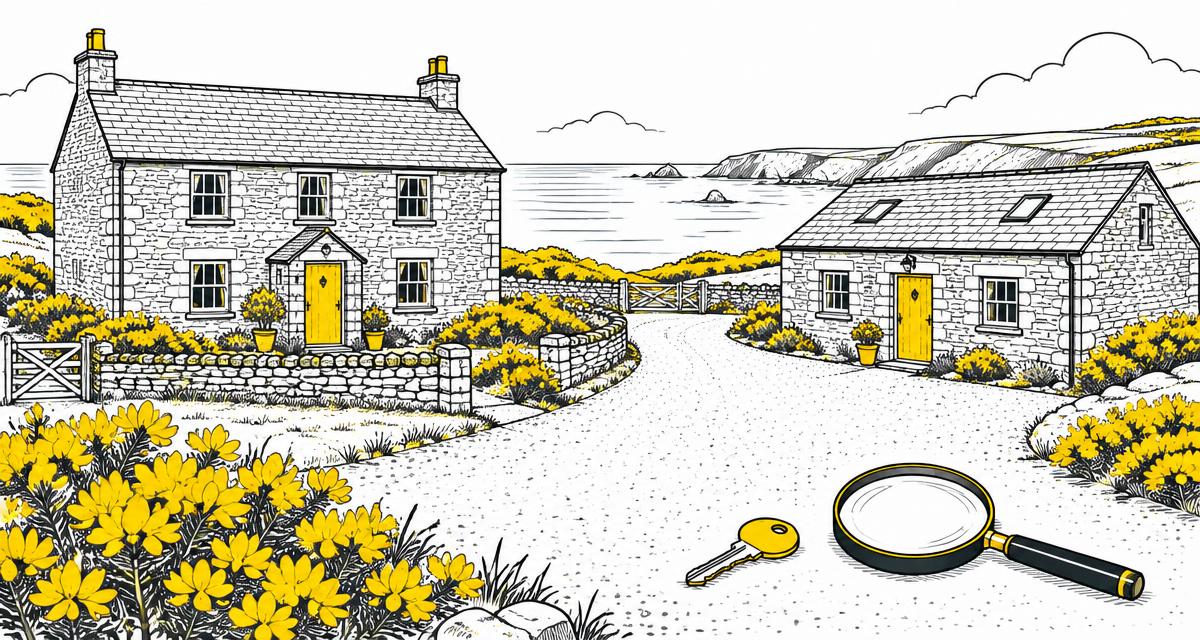
In short: Rent a Room relief lets you receive up to £7,500 a year tax free (£3,750 if someone else also receives letting income from the same home) for letting furnished accommodation in your only or main home. The most common mistake is claiming it on space HMRC treats as a separate residence: a self-contained annexe, a converted barn, a garden studio or a cottage elsewhere on your land.
In Cornwall, plenty of homeowners have a barn, annexe or studio on their land that earns income from holidaymakers or long-term tenants. It is easy to assume the first £7,500 is tax free because it is "on your property". This guide sets out HMRC's rules, with references to its own guidance, and works through the pitfalls one at a time. If you let property more widely, see our landlord services.
Rent a Room relief: the basics in 60 seconds
- Limit: £7,500 of gross receipts per tax year, or £3,750 if someone else receives income from letting accommodation in the same property, such as a joint owner. The limit is the same even if you let for less than 12 months.
- Who: individuals only. Companies and partnerships cannot claim. You can be an owner occupier or a tenant.
- What: furnished accommodation. A lodger qualifies, and so does a trade such as a guest house or B&B, including one that provides meals and cleaning.
- Where: in a residence that is your only or main residence at some time during the letting period (ITTOIA 2005 s786).
- How: receipts under the limit are exempt automatically. Above the limit, you choose between paying tax on actual profit (Method A) or on receipts over the limit with no expenses deducted (Method B).
Pitfall 1: Not understanding what "residence" means
Everything turns on the legal definition. Under ITTOIA 2005 s787, a "residence" is a building, or part of a building, occupied or intended to be occupied as a separate residence, or a caravan or houseboat. A building designed for permanent use as a single residence is still treated as one residence if it is only temporarily divided into separate parts.
So one plot of land can hold more than one residence. Your house is one. A self-contained flat, annexe or converted outbuilding may be another. The question is always: is the space I let part of my home, or is it a home in its own right? HMRC's helpsheet HS223 is clear that you cannot use the scheme if the accommodation is not part of your main home when you let it.
Pitfall 2: Self-contained annexes and flats inside the house
A basement flat, an attached granny annexe or a unit over the garage can only qualify if the division from your home is temporary. HMRC's guidance at PIM4004 says relief is available for a self-contained flat in your main residence only if you are a qualifying individual and the division is only temporary. HMRC officers look at factors such as these:
| HMRC factor (PIM4004) | Points towards temporary (good for relief) | Points towards separate residence (relief at risk) |
|---|---|---|
| Would undoing it need structural work? | A lockable internal door you could simply open | Walls built, stairs removed, separate kitchen plumbed in |
| How long has it been divided? | Recently, for a short-term need | Years or decades |
| How long will the division last? | A defined, short period | Indefinitely |
| Could it be occupied or sold on its own? | Not practical | Could be let or sold separately |
| Separate mains supplies and meters? | Shared with the house | Its own meters |
| Its own postal address? | Same as the house | For example "The Annexe" |
| Its own entrance? | Reached through the house | Its own front door |
| Would a lender treat it as separate security? | No | Yes |
HMRC says this list is not exhaustive and each case turns on its facts. In practice, a purpose-built annexe with its own kitchen, bathroom, front door and meters will usually be treated as a separate residence.
Red flag: "it has the same postcode and we pay one council tax bill" helps, but it is not decisive. HMRC looks at the whole picture.
Pitfall 3: Converted barns, garden studios and second buildings on the same land
This is where the most expensive mistakes happen. You live in the farmhouse, convert the old barn into a holiday let or long-term rental, and assume Rent a Room covers the first £7,500. The law works against you in two ways:
- A converted barn is usually a building occupied as a separate residence. With its own kitchen, bathroom, entrance and bedrooms, let as a self-contained unit, it is very likely a residence in its own right.
- The temporary division rule rarely helps. It only applies to a building designed for permanent use as a single residence that is temporarily divided, and HMRC reads it narrowly (PIM4002). A barn converted with planning permission to be self-contained was never part of your house to begin with.
Some practitioners have argued from capital gains tax cases that outbuildings can form part of a residence. Those cases apply a different test and usually involve buildings used by the owner, not a unit let to strangers. HMRC's published Rent a Room guidance gives no support for this, so treat it as a high-risk position needing specialist advice.
Signs a barn or outbuilding claim is especially weak:
- It has its own kitchen and bathroom, so guests never enter your house
- It is advertised as a standalone property, such as a self-catering cottage
- It has its own council tax band or business rates assessment
- It has its own address, meters or access
- It is let at times when you do not use it yourself
A planning condition that it cannot be sold separately helps on one factor, but it does not stop the building being a separate residence while it is let.
What to do instead: treat the income as ordinary property income, or trading income if run as a serviced business. You will normally claim actual expenses, or the £1,000 property allowance if that is better. The furnished holiday lettings regime was abolished from April 2025, so FHL status no longer helps. Our Cornish holiday let tax guide explains the current position.
Pitfall 4: Running one business across the house and a separate building
Even where part of your letting is in your home, relief can be lost entirely if the home and the separate building form a single source of income. HMRC's guidance at PIM4012 gives the example of a guest house run partly in the main residence and partly in a separate property: if the rents form one source, none of the income from the main house qualifies.
Example: Jo runs a B&B with two rooms in her farmhouse and three in a converted stable block, all marketed, booked and serviced as one business. HMRC is likely to say this is one trade carried on partly outside her home, so Rent a Room is unavailable even for the farmhouse rooms. To protect relief on rooms in your home, the activities need to be genuinely separate, with separate agreements, records and marketing.
Pitfall 5: "All in or all out" with two sources in your home
You can have more than one source in the same home, such as a long-term lodger and occasional B&B guests. HMRC says the rules apply to all sources in the residence together (PIM4012). You cannot exempt one source because it is under the limit if the combined total is over it.
Pitfall 6: Any unfurnished letting in the same home
Rent a Room only covers furnished accommodation. HMRC's guidance at PIM4012 goes further: if you have any unfurnished letting in your main residence, you are not a qualifying individual, so a furnished letting in the same home cannot get the relief either. The safe course is to make sure everything you let in your home is furnished.
Pitfall 7: Assuming everyone in the house gets £7,500
The limit halves; it is not "per lodger" or "per owner".
- If anyone else receives income from letting accommodation in the same residence while it is your main home, your limit drops to £3,750 (ITTOIA 2005 s789 and s790).
- The test looks at a window including the 12 months before and after each letting period.
- In HMRC's example at PIM4010, three sisters let in the same house but only one lives there. Only she qualifies, and her limit is halved to £3,750.
Watch out: a co-owner who does not live in the property cannot claim at all, but their letting income can still halve your limit.
Pitfall 8: Testing profit instead of gross receipts
The £7,500 test applies to gross receipts: rent, amounts for meals, cleaning or laundry, contributions towards bills, and any balancing charges. In HMRC's worked example in HS223, Chris charges £200 a week plus a contribution to heating and lighting, giving gross receipts of £10,600 against £9,000 of expenses.
| Method A (actual profit) | Method B (Rent a Room basis) | |
|---|---|---|
| Taxable amount | £1,600 | £3,100 |
Method A wins here because Chris has high expenses. Airbnb hosts who charge cleaning fees, breakfast or linen often go over the limit without realising.
Deadlines: to opt out when under the limit (for example, to claim a loss) or to start or stop Method B, tell HMRC within one year of the 31 January after the end of the tax year. For 2025/26, that is 31 January 2028. A Method B election carries on until you withdraw it, so review it every year.
Pitfall 9: Letting space for an office, business or storage
Rent a Room only covers residential accommodation. HMRC says it does not apply to rooms let as an office, for other business purposes or for storage (PIM4001 and PIM4002). A lodger who works from home in the evenings is fine, but renting a garden office, workshop or garage to a local business is not covered.
Pitfall 10: The property is not really your main home
The let accommodation must be in your only or main residence at some time during the letting period, and HMRC tells officers to look critically at claims involving second homes and holiday homes (PIM4001).
- Moving abroad: relief will not normally apply if you live abroad and let your UK home, unless the letting started before you left (PIM4015).
- Moving home: if you let in both your old and new homes in the same year, the receipts share one limit.
- Whole-house Airbnb lets of a second home do not qualify.
Pitfall 11: Forgetting capital gains tax when you sell
Rent a Room is an income tax relief. It does not protect your capital gains tax position.
- A lodger who lives as part of the family generally does not reduce private residence relief (CG64311).
- A self-contained flat with separate access is treated as a separate dwelling for CGT, so a gain on that part may not be covered.
- Lettings relief has only applied since 6 April 2020 where you share occupancy with the tenant (CG64710). It will not help with a separately occupied annexe or barn.
Pitfall 12: Overlooking Making Tax Digital and the 2027 rate changes
- Making Tax Digital for Income Tax applies from 6 April 2026 to individuals with qualifying self-employment and property income over £50,000, falling to £30,000 from April 2027 and £20,000 from April 2028. Rent a Room receipts within the limit that you do not report are ignored for the threshold. Above the limit, views differ on whether the full gross rent or only the excess counts, so take advice if you are close. See our Making Tax Digital guide for landlords.
- Property income tax rates rise to 22%, 42% and 47% from April 2027 in England, Wales and Northern Ireland. The government has confirmed the Rent a Room scheme and property allowance are unchanged, but a wrongly claimed relief will cost more to put right.
Quick checker: does my letting qualify?
| Scenario | Likely outcome | Why |
|---|---|---|
| Lodger in a spare bedroom, shares the kitchen | Qualifies | Furnished accommodation in your main home |
| Airbnb guests in a spare room while you live there | Usually qualifies | A trade in your home can qualify (HS223) |
| Room let as an office or for storage | No | Not residential use (PIM4001, PIM4002) |
| Basement flat with own door, kitchen and meters, divided years ago | Usually not | Permanent division, so a separate residence (PIM4004) |
| Annexe used as a guest suite, internal door, shared meters, recently created | Possibly | Depends on the PIM4004 factors |
| Converted barn or cottage let as self-catering | Very unlikely | Separate building occupied as a separate residence (s787) |
| B&B across your house and a converted outbuilding, run as one business | Likely lost on all rooms | One source partly outside your home (PIM4012) |
| Unfurnished room let alongside a furnished lodger | No relief at all | PIM4012 |
| Whole second home let on Airbnb | No | Not your only or main residence |
| You and a non-resident co-owner both receive rent | Your limit halves to £3,750 | ITTOIA 2005 s790 |
Not sure where your annexe or barn stands?
If you let part of your home, an annexe or a converted building anywhere in Cornwall, we can review the facts against HMRC's tests, work out whether Method A or Method B is better, and help put things right if relief has been claimed when it should not have been. Book your free chat with our Helston team.
HMRC sources checked
- HS223 Rent a Room Scheme (2026)
- PIM4001 Rent a room: overview
- PIM4002 Rent a room: letting as office accommodation
- PIM4004 Rent a room: building divided into separate residences
- PIM4010 Rent a room: exemption limits
- PIM4012 Rent a room: more than one source
- PIM4015 Rent a room: going abroad
- ITTOIA 2005 Part 7 Chapter 1
- CG64311 Private residence relief: part of the building let and CG64710 Lettings relief
- Change to tax rates for property, savings and dividend income
This article is general information based on HMRC guidance and legislation as at 25 November 2026. It is not tax advice. HMRC's manuals set out HMRC's interpretation, and the facts of your case matter, especially for annexes and outbuildings.
Frequently asked questions
- Can I claim Rent a Room relief on a granny annexe?
- Only if the annexe is part of your own residence and not a separate residence. If it is attached to the house and the division is genuinely temporary, it may qualify. A permanent, self-contained annexe with its own entrance, kitchen and meters will usually not. HMRC applies the factors in its Property Income Manual at PIM4004.
- Can I use Rent a Room for a converted barn on my land?
- Almost certainly not if the barn is self-contained and let as a separate unit. It is a building occupied as a separate residence, so it is not part of your home, even if it shares your postcode, drive and council tax bill.
- Does Airbnb income qualify for Rent a Room relief?
- It can, if you let furnished rooms in the home you live in. HMRC accepts that a bed and breakfast type trade in your home can qualify. Cleaning fees and other charges count towards the £7,500 gross limit. A whole second home let on Airbnb does not qualify.
- Is the £7,500 Rent a Room limit per lodger?
- No. It is per tax year for the qualifying individual, however many lodgers you have, and it halves to £3,750 if anyone else also receives income from letting accommodation in the same residence.
- Can I deduct expenses and still use Rent a Room relief?
- No. Under the scheme you cannot deduct expenses or capital allowances. If your expenses are high, paying tax on your actual profit (Method A) may be better, and you can choose it by telling HMRC by the deadline.
- What happens if I have claimed Rent a Room relief wrongly?
- HMRC can normally go back four years for careless errors and longer for deliberate ones, and charge interest and penalties. If you think you have over-claimed, it is usually better to correct it voluntarily through an amended return or HMRC's disclosure routes, with professional help.